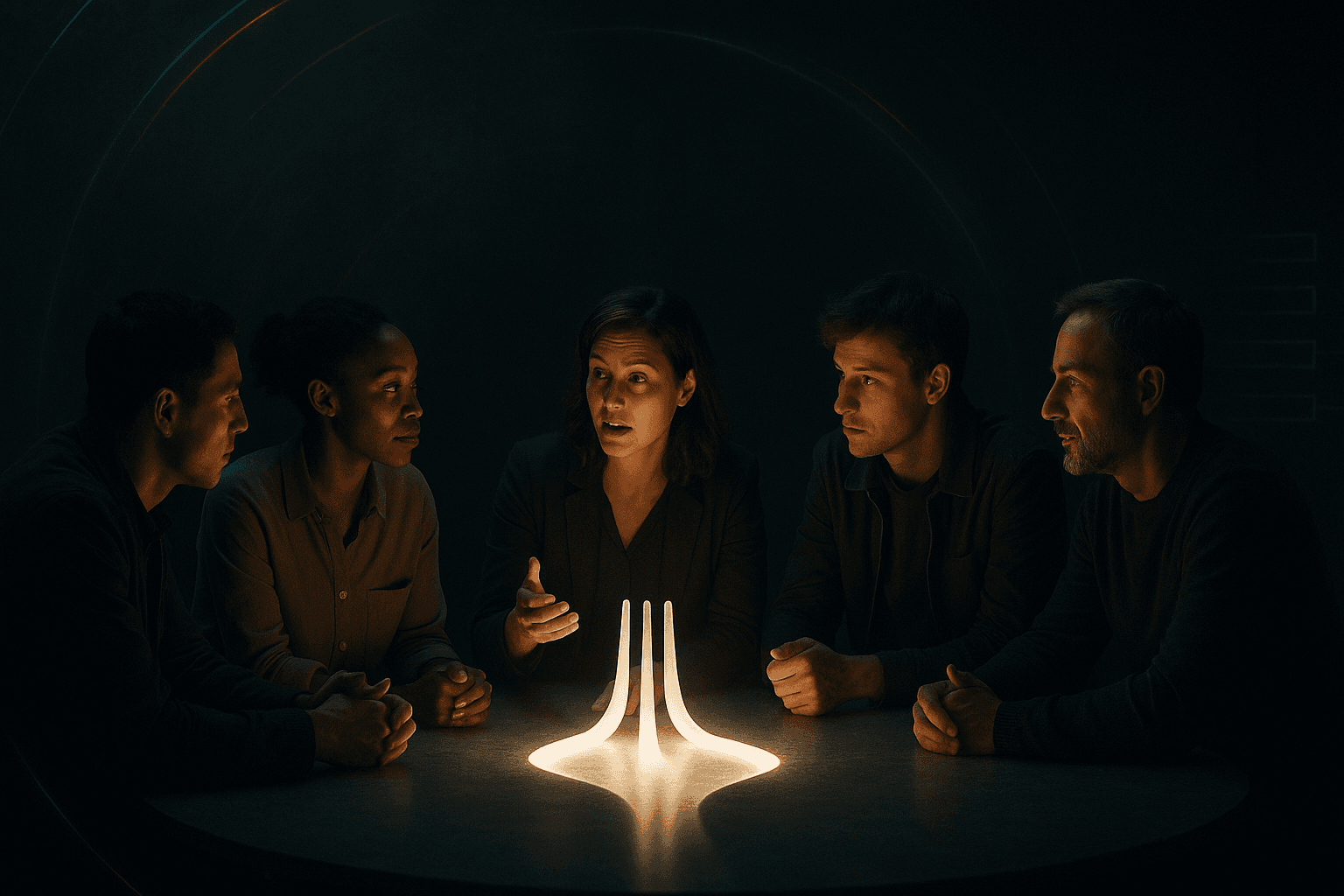
In MagnaFork, a fork is people. It has a shared conversation, a visible history, and its own current state. That is why a person enters not an empty space, but a live group of participants.
What makes a fork feel alive
When a person opens their fork, they do not see an empty space. They see a specific group:
- who belongs to that fork;
- what state it is in;
- where the shared conversation happens;
- how the group changes over time;
- where shared communication ends and personal messages begin.
That is what makes a fork understandable. A person sees not only the current state, but the group where interaction is already happening.
Shared chat, history, and participants
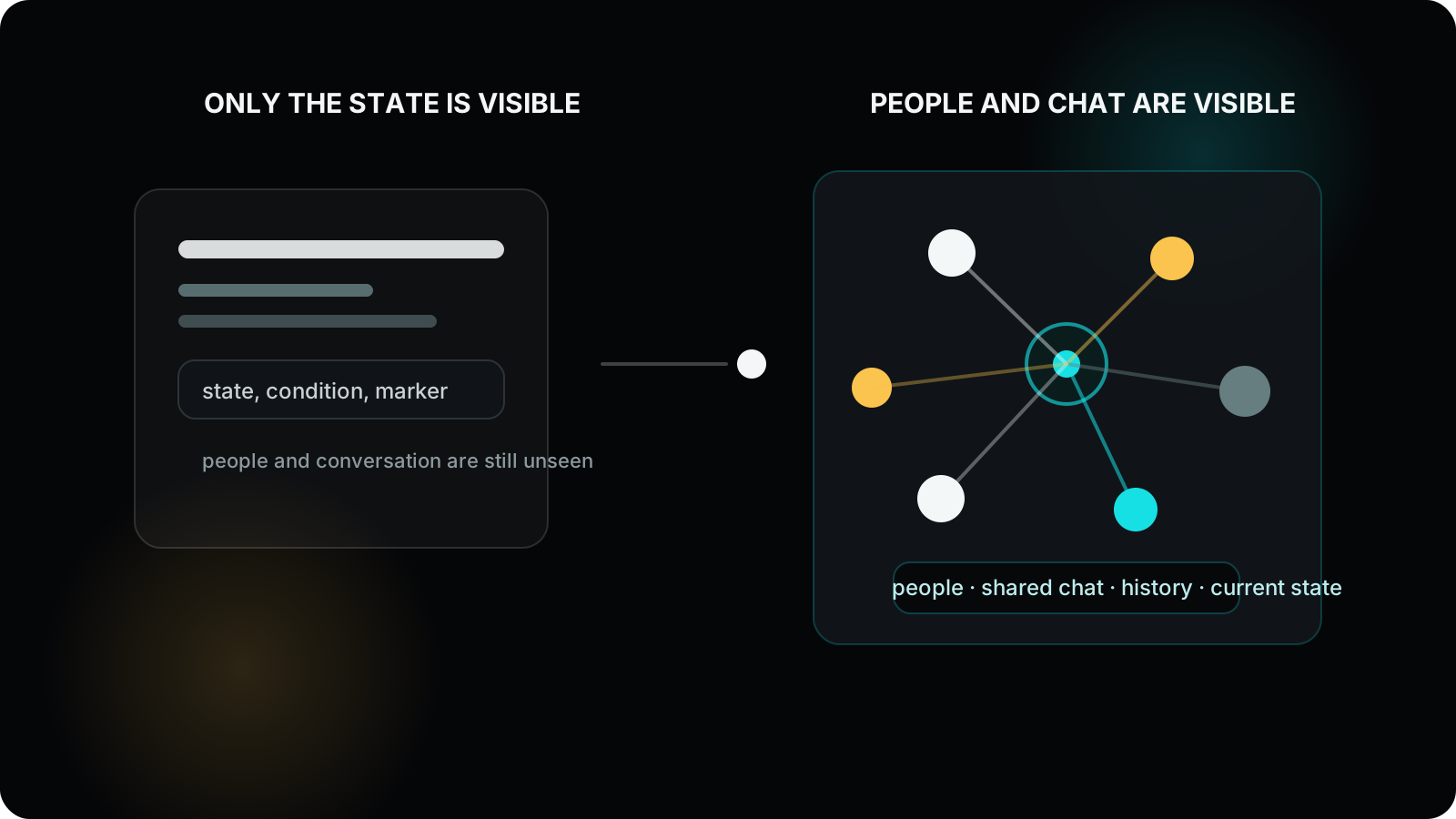
When a person sees only the state, the fork still feels distant. When people, shared chat, and history are visible, the fork starts to feel alive.
For a fork to feel real, a person needs to see the group itself:
- the shared fork chat;
- the participant list;
- communication history;
- the current movement inside the group.
When all of that is visible at once, a fork is remembered as a live group a person has already entered.
What this changes for participation
Once people and shared conversation exist inside a fork, participation stops feeling impersonal.
Once a fork has its own people, shared conversation, and history, the nature of the product changes:
- participation becomes visible instead of abstract;
- trust depends not only on rules, but also on visible conversation;
- returning to the fork brings a person back to a place where conversation is already continuing;
- the product itself feels closer and easier to understand.
This is an important shift for MagnaFork. The product becomes a place where people do not only participate, but also stay connected inside their fork.
What this changes for the participant
For the participant, this means something simple: they enter a live group rather than an empty space.
They see:
- their fork;
- the people inside it;
- the shared chat of that group;
- the history of communication;
- the current state of the group.
Because of that, the fork is remembered as a specific group of people a person is connected to.
Why this matters for MagnaFork
MagnaFork is built on transparent rules, but it becomes truly strong when a fork is experienced as a live group of participants rather than an anonymous entry point.
That is why a fork in MagnaFork feels like a live group of people with its own communication space.