

Interest in participation does not come from fog. It appears where a person can see the field in advance: the rule, the people nearby, and the consequence of the next move. In MagnaFork, that is what keeps participation alive without losing clarity.
Why MagnaFork does not build interest on noise
A boring product does not keep attention. A noisy product burns trust fast. MagnaFork chooses neither extreme.
Interest here comes from a readable participation environment:
- the rule is visible before the action;
- communication boundaries are clear;
- shared context does not disappear between entries;
- the next move changes an existing field rather than emptiness.
That is why participation here does not feel like a dry scheme. But it does not turn into chaos either. A person can see where they are entering, who is nearby, and why the next step reads the way it does.
A good game starts with a visible field
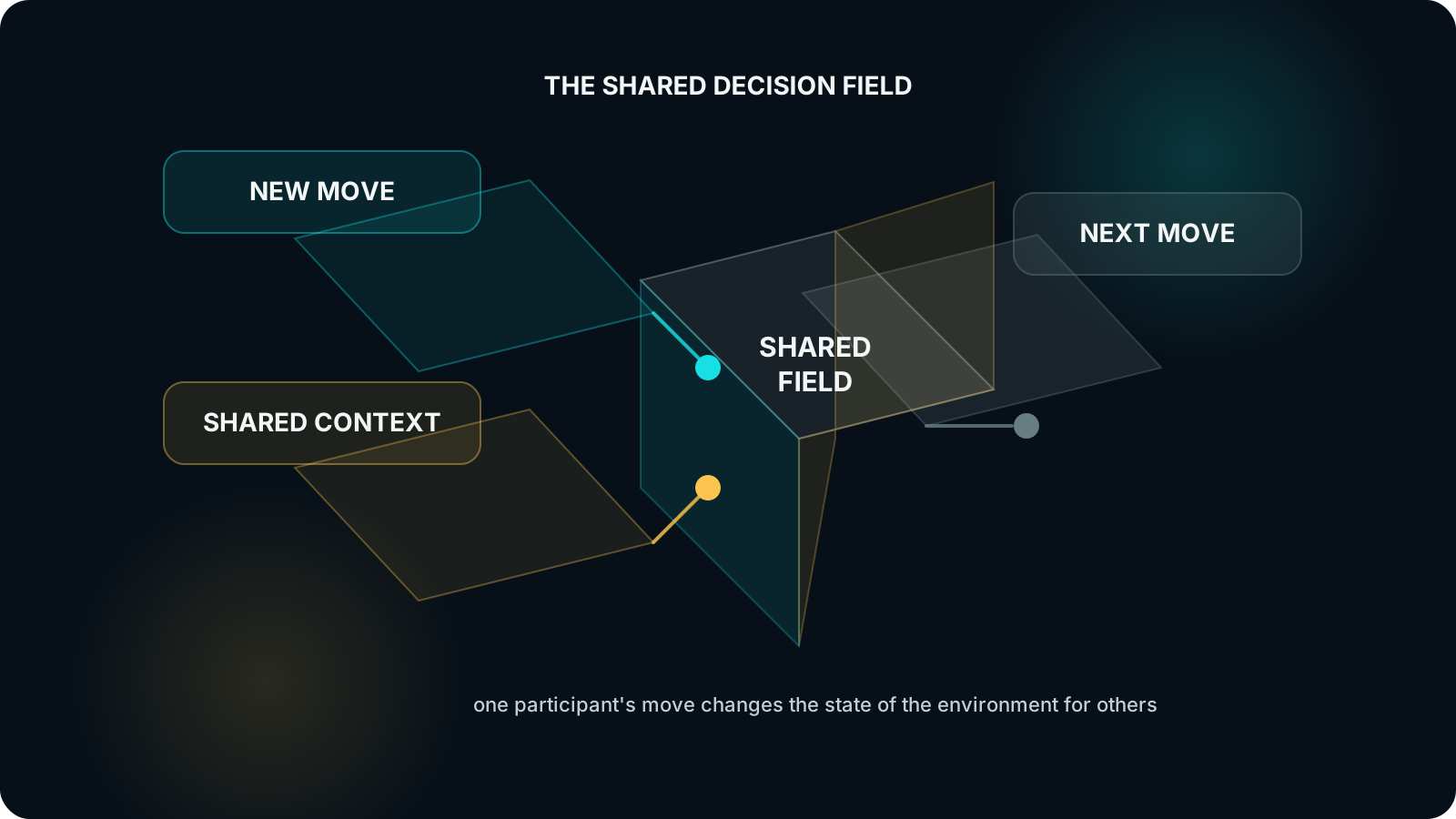
When the rule, the status, and the next step are visible in advance, participation stays alive without turning into chaos.
Any good game depends on three things: the field is visible, the move is understandable, and the consequence is understandable. In MagnaFork, that reads like this:
| What a person needs to see | How this works in MagnaFork |
|---|---|
| the rule before entry | participation conditions and status do not appear after the fact |
| the people nearby | it is visible who is inside the fork and where the shared conversation happens |
| the communication boundary | the shared channel does not mix with a personal dialogue |
| the return path | with the same wallet, a person returns to the same context |
When the whole field is visible, a person does not need to guess what is happening. They understand not only their next step, but also the shared context in which that step exists.
Every move changes the shared field
When people talk about game theory, they often imagine tricks, competition, or complicated strategy. For a product, something simpler matters more: one participant's decision changes the environment for others.
That is why MagnaFork reads not as a chain of isolated clicks, but as a shared participation environment:
| What happens | What changes in the shared field |
|---|---|
| a person enters a fork | the current state of the environment changes not only for them |
| a message appears in the shared channel | the shared context changes for the whole group inside that fork |
| a person returns with the same wallet | interaction continues inside the existing field instead of starting from zero |
| the rule and status are visible in advance | the decision is made inside a clear frame rather than blindly |
This is the useful effect of a shared field. It does not make participation more complicated. It makes consequences easier and calmer to read.
Honest rules leave room for live participation
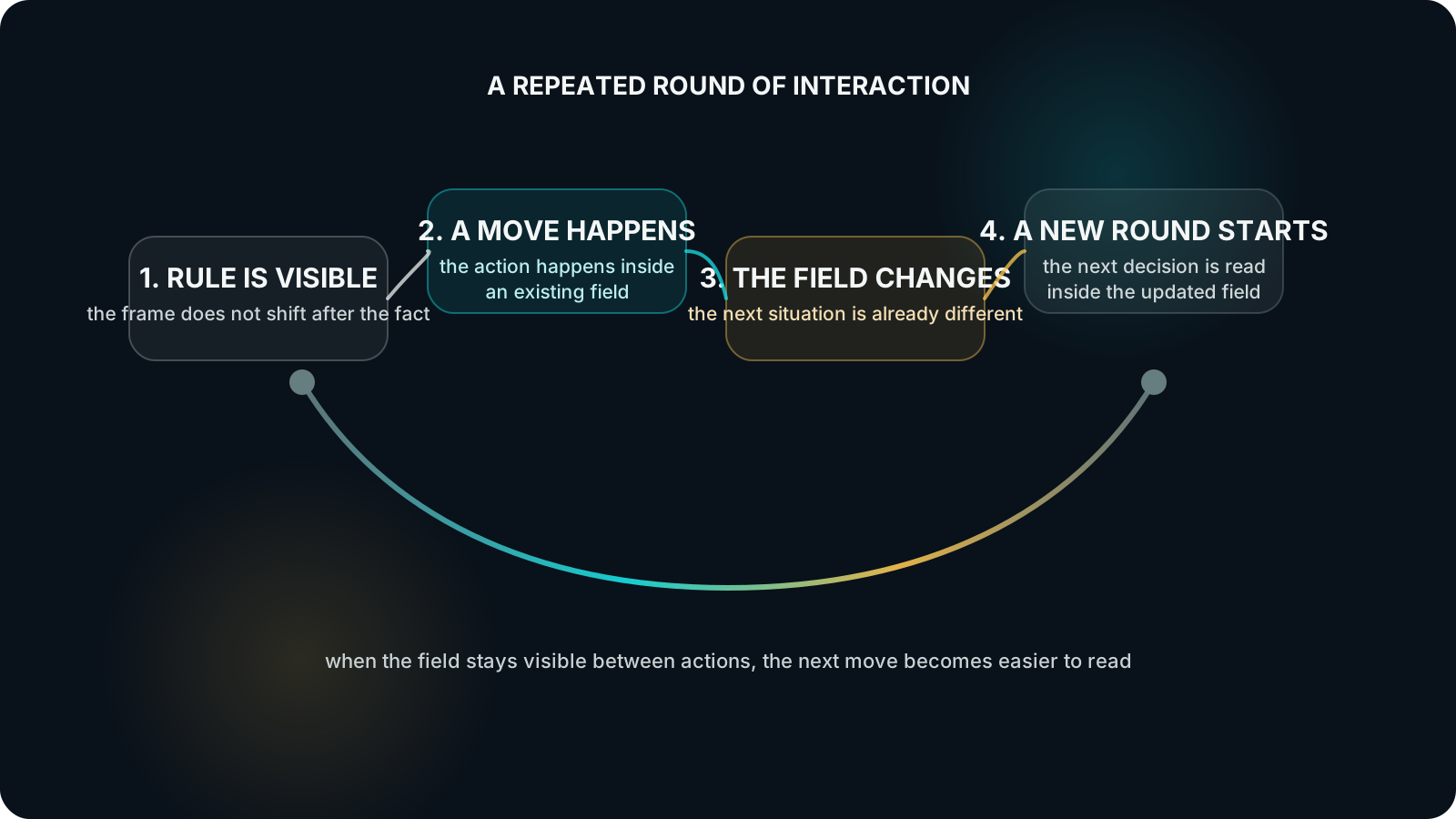
Liveliness holds not because of randomness, but because interaction repeats inside the same environment.
For MagnaFork, it matters that the shared context does not disappear between actions:
- the rule does not change after the fact;
- the state of the environment stays visible;
- the shared conversation continues;
- a person returns not to emptiness, but to an existing context.
That is why the product does not need noisy gamification. An honest field is enough, where an action has consequences and returning does not reset the context that already exists.
What a participant gets in practice
For a participant, this means something simple: they act less blindly and return more willingly to an environment they can read.
A participant gets:
- a clearer next step;
- less fog around the shared state;
- a clearer boundary between a personal decision, the shared channel, and a personal dialogue;
- a return to the same context rather than an empty restart.
That matters especially in a private participation network. In an environment like that, trust does not come from dramatic claims, but from a visible field, readable consequences, and a next round that stays connected to the previous one.
Why this matters for MagnaFork
MagnaFork keeps attention not through promises or fog, but through a readable field of participation.
First the rule is visible, then the people, then the conversation, and only after that does a stable rhythm of participation appear. That is the strong marketing line for MagnaFork: honest rules do not kill the game. They make it possible.